Sunday, August 24, 2014

 This Sauce is Genius!


I began my love affair with ethnic cuisines in Chicago, in the neighborhoods, those places that reduced the awesome experience of urban life to human scale. "The city of big shoulders", native Chicago poet Carl Sandberg called his hometown.  Chicago is a town big enough for everyone, and is home to many of the nationalities of the world, which has led to a lot of diversity, both cultural and culinary.  Every type of food you can think of you'll find in Chicago's kitchens. Taylor street in Chicago is where I realized that the Italian food that has come to our general American culture is at once delectable and embarrassing.  The delectable part comes from first class Italian kitchens, in Little Italy like The Rosebud and the embarrassing part comes from the host of chain Italian-American restaurants (who I won't name) that serve things that most Italians have never seen like chicken parmesean, stuffed shells and deep fried ravioli, not to mention dipping bread in olive oil and balsamic vinegar. 

Little Italy in Chicago is bordered on the north by the Eisenhower Expressway, on the East by the Kennedy Expressway, on the South by Roosevelt Rd and on the West by Polk Street. The Rosebud on Taylor is a charming restaurant with old world Italian spirit. It's my all-time favorite restaurant in Chicago. 

I've been working for years trying to perfect their pasta sauce. I think I may have finally nailed it! Everyone should have a hearty pasta sauce like this in their repertoire.  I love to serve it to food-loving friends with an earthy red wine. While it is perfectly delicious with the traditional sprinkling of freshly grated Parmigiano-Reggiano cheese, you might try topping it with a dollop of fresh ricotta and a grinding of fresh black pepper. Balance and harmony at it's best. 

The Rosebud's Pasta Sauce (Gwenn's version)

1/3 cup Olive Oil  (I love Colavita extra virgin)
7 cloves garlic, crushed
1 large yellow onion, finely chopped
10 cups cored and chopped very ripe fresh Roma tomatoes
1-28oz can whole plum tomatoes with juice (I love Contadina brand)
1/2 lb fresh mushrooms, chopped
1/4 cup fresg Italian flat leaf parsley (chopped)
1/2 cup dry white wine
1 cup chicken stock
1 tsp dried margoram
1 tsp fresh rosemary
1 tbsp fresh basil  (chopped)
1 tbsp fresh oregano (chopped)
6 tbsp salted butter
1 oz. dried porcini mushrooms
1 jar roasted red peppers packed in olive oil (or can make your own fresh)
1/2 cup sliced black olives
1/2 cup sliced large green olives (stuffed with garlic)
6 mild Italian Sausages, cooked and sliced about 1/2" thick
1 small can tomato paste (I love Contadina brand)
1 tsp sugar
Salt and pepper to taste

Freshly grated Parmagiano-Reggiano Cheese ( I love Kirkland brand-it's made from sheep's milk) or a dollop of Ricotta and freshly ground black pepper


Soak porcini mushroom in 1 cup of hot water for 45 minutes, drain and chop
Heat an 8-10 qt heavy bottom pot
Add oil, garlic, mushrooms, and onion.  Saute until the onion is clear
Add remaining ingredients except butter, salt and pepper
Bring to a simmer and cook uncovered for 4 hours stirring often.  Stir in butter, salt and pepper.
Serve over a bull bodied pasta like Rigatoni or Penne.
Serve with graded Parmagiano-Reggiano cheese or a dollop of Ricotta and freshly ground black pepper.

Mangia bene, vivi felice!

Sunday, March 16, 2014

"Laughter is brightest where food is best." - Irish Proverb


They say that there are two kinds of people in this world, "those who are Irish and those who want to be Irish."  Such is the wonderful arrogance of those of us whose ancestors hailed from the Emerald Isle.  And it must be true.  After all, there are some 40 million+ Americans who claim Irish ancestry, that's almost ten times the population of Ireland.  And on St. Patricks Day, everyone is Irish!

My Irish grandmother immigrated to this country when she was 14 years old.  She died at 104. She used to tell me that people outside of Ireland think Irish food consists of nothing more than potatoes and mutton. I remember her talking about how the food and cooking of Ireland is steeped in history and heritage. She told me how Irish food draws on the wealth of ingredients from the sea, the land, the moors and pastureland in Ireland. She always said, "we did have a Great Famine but at other times the Irish enjoyed many a good take away."

Home and family played an important part in my Irish grandmothers life. Irish food and cooking were at the center of it.  Her kitchen was the heart of her home.  Her Irish hospitality and love of celebrating were renowned. 

She always told me that "It takes a certain amount of gall to be a good cook, you have to be in charge."  The week of  St. Patrick's Day, she would make three of my favorite dishes. 
Irish Soda Bread
Potato Onion Soup
Irish Boiled Dinner
Irish Soda Bread


Soda Bread is an amazingly easy, versatile recipe which has stood the test of time as an Irish classic because of it's simplicity. It is a no-knead, no-fuss style of bread which is my kind of recipe! It get's its rise from a combination of creamy Irish buttermilk and bread soda.  It's delicious on its own or served with a warm bowl of Potato Onion Soup. 

6 cups all purpose flour                                               3 Tbsp cornstarch
2 tsp baking soda                                                        2 tsp sugar
2 tsp baking powder                                                   1 tsp salt
2 1/2 cups buttermilk

Preheat oven to 375
Add all dry ingredients in a large bowl and mix very well.  Pour all of the buttermilk into the bowl at once and stir, using a wooden spoon, just until a soft dough if formed.  Do not try to make it smooth.  Pour the contents of the bowl out onto the counter and knead for a minute or so until everything comes together.

Divide dough into two portions and shape each into a round loaf, pressing the top down a bit to just barely flatten it.  Place the loaves on a large ungreased baking sheet. Sprinkle some additional flour on the top of each loaf and, using a sharp paring knife, make the sign of the Cross in slashes on the top of each.

Allow the loaves to rest for 10 minutes and then bake on the middle rack of the oven for 40 minutes or until the loaves are golden brown and done to taste.  Cool on racks. 


Potato-Onion Soup


My grandmother told me that yes, it was true that the Irish lived on potatoes for a time.  She said the old country had never been wealthy in food, but the Irish have always been wealthy in humor and spirit and that is what mattered.  She remembered this soup and was able to recreate it for her family.

4 Tbsp butter                                       1 cup light cream
2 medium yellow onions, sliced             2 lbs potatoes peeled and sliced
3 cups milk                                          1/4 cup fresh chives, chopped                                       
5 1/2 cups chicken stock                      1/ 2 tsp celery seeds
1/4 tsp fresh thyme, chopped               
 Salt and freshly ground pepper to taste
        Roux:
             2 Tbsp butter
             2 Tbsp all purpose flour
       Garnishes:
              1/2 cup chopped fresh chives
              6 slices bacon, crisply fried and chopped

Heat a stockpot, add butter and onion and cook gently.  Do not let the onion brown.  Add the peeled and sliced potatoes, milk and stock.  Add herbs.  Cover and cook gently for about an hour.
Prepare a roux: Melt the butter in a small saucepan and whisk in the flour.  Let the flour and butter mixture bubble for about 2 minutes on medium/low, stirring constantly.  Thicken the soup with the roux, whisking carefully to avoid lumps.  Cook for 5 to 10 minutes and then puree the soup in a food processor or blender.  Add the cream and gently reheat, but do not boil.  Season with salt and pepper.  Serve with chopped fresh chives and the crisply fried bacon as garnishes.  


Irish Boiled Dinner
My grandmother said that in Ireland, they never eat corned beef, they ate mostly lamb and pork. She said that the first time she had beef brisket was when she immigrated to Boston. She would either make this boiled dinner if she was having the potato onion soup, or an Irish Lamb Stew if she was not making the soup.


1  3 1//2 lb fresh beef brisket                                     2 cups water (or just enough to cover)
2 12 ounce bottles lager beer                                     2 bay leaves
10 black peppercorns                                                1/2 cup chopped parsley
2 tsp salt                                                                   2 Tbsp butter
3 cloves garlic, peeled and sliced                               2 cups rinsed and chopped leeks (white parts only)
1 medium onion, peeled and sliced                             3/4 lb large carrots, cut into large pieces
3/4 lb small red potatoes                                            1 lb turnips, peeled and quartered
2 lbs green cabbage, cut into sixths (secure with toothpicks)
Salt and freshly ground pepper to taste

Place an 8-10 qt stove-top covered casserole on the burner and add the beef, beer, water, bay leaves, peppercorns, parsley and salt.  Heat a frying pan and add the butter.  Saute the garlic, leeks and yellow onion for a few minutes and add to the casserole.  Cover the pot and simmer gently for 3 1/2 hours or until the meat is very tender (about 1 hour per lb of brisket).  In the last 25 minutes of cooking, add the carrots and red potatoes.  In the last 15 minutes of cooking, add the turnips, cabbage, salt and pepper.  (Remove the toothpicks before serving.)


Wednesday, February 12, 2014

Grandma Young's Sugar Cookies


An aroma, identified in our brain's limbic system, can trigger an emotional memory, but it takes hard work in the kitchen to put the right ingredients together in the right proportions to produce the ancestral potato salad, pasta sauce or cookies. Family recipes often originate with a matriarch who isn't around to reveal the kitchen tricks learned from the previous generation. As a result, many of us modern cooks must start from scratch.

The holidays always trigger emotional memories for me, especially when my brain is stimulated by an aroma. This year it was a trip into Yankee Candle that did it for me. Their "Christmas Cookie" candle permeated the store, and I was hit by a wave of nostalgia.  The memories of my Grandma Young's sugar cookies fueled my desire to recreate her recipe for my family and friends.
 

 My Grandma Young was a marvelous intuitive cook. She could feed a crowd with one chicken and some vegetables out of her garden. She passed away at 104, but the whole family and many friends will always remember her wonderful food and hospitality.  They will especially remember the plate of sugar cookies that she lovingly presented to them when they sat down in her living room.

I loved that memory so much that I didn't want to let it go. So, I've been a kitchen detective, working for a month or so, trying to recreate her recipe.   I think I may have nailed it!

Grandma Young's Sugar Cookies
4 cups all-purpose flour
1 teaspoon cream of tartar
1 teaspoon baking soda
1/2 teaspoon salt
1/4 teaspoon light corn syrup
1 cup (2 sticks) butter, softened
1 cup powdered sugar
1 1/2 cups granulated sugar
1 cup canola oil
2 eggs
1 teaspoon vanilla extract

1. Sift together flour, cream of tartar, baking soda and salt.
2. Combine butter, powdered sugar and 1 cup granulated sugar in a large bowl. Beat with an electric mixer.
Add oil, eggs and vanilla, corn syrup, mixing to combine. Gradually add flour mixture. Chill dough 3 to 4 hours until firm.
3. Preheat oven to 350F.
4. Shape dough into walnut-size balls and roll in remaining 1/2 cup granulated sugar. Place cookies on an ungreased baking sheet. Dip the bottom of a glass in granulated sugar and press gently onto each ball. (Do not flatten)
5. Bake 12 minutes or until lightly browned. Remove cookies from pan after about 4 minutes and let cool on a layer of newspaper covered with wax paper, or brown paper grocery bags cut open and laid flat. 

Makes 3 dozen

Sunday, January 26, 2014

"The Superbowl is Americana at it's most kitsch, and fun." - Sting

Only in the South is game day more celebrated than any other event, but Super Bowl Sunday, a de facto American national holiday…it's only football’s Biggest Day of the year in the entire country! Flatscreen TV's, brilliant commercials, passionate fans, bigger than life half-time shows, extravagant food.... whats not to love? My favorite part...preparing the food. I like football food to be bold and aggressive, like the game, full of flavor, color and texture, but I don't want people to walk away feeling like a football. This year, I am composing  a menu based on team colors from the Denver Broncos and Seattle Seahawks.

For the raw foodie, carrots, green onions, celery, green pepper, yellow pepper, red pepper, and edamame with spinach/dill dip


An old standby, potato skins with chili, guacamole and salsa. 


You can't watch the  Superbowl without wings. (Of course they have to be orange glazed) 


You've just gotta have dip, queso (with blue corn chips)


Nothing says football like these stuffed gridiron sandwiches. 


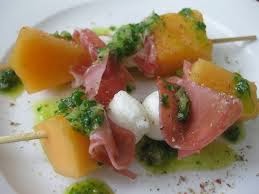
By now, one needs something cool and fresh.  Melon, prosciutto bites. 


And fruit kabobs with yogurt dip.


Sweet endings.

Cake pops,


and Macaroons.

 
How about washing it all down with these colorful libations?


or these......


The best part......

The post game nap!


Saturday, October 5, 2013

Gardening looks mighty easy when your trowel is a pencil and you're a thousand miles from the raised bed

     I've tried to embrace my Scotch-Irish roots. I really did. 
Gwendolyn Young/Fairbairn/O'Halloran, just how Celtic can you get?  
Especially after moving to the verdant rolling hills of Middle Tennessee. I couldn't wait to embrace that Celtic love of the land and plant a garden and throw myself into yard work. I wanted to take it literally, you know, grow where your planted. After living in the Sonoran Desert for 8 years, where my weekends were spent by the pool and our gardening was outsourced, I was excited about the possibilities and getting some dirt under my nails. Hands in the dirt, head in the sun, heart with nature, that's what I imagined. Jerry was ecstatic about resuming his love affair with Home Depot and some new toys in the form of lawn equipment. 
hands in the dirt, head in the sun, heart with nature.
Read more at http://www.brainyquote.com/quotes/topics/topic_gardening.html#XXkYb78cJc2ottrS.99
hands in the dirt, head in the sun, heart with nature.
Read more at http://www.brainyquote.com/quotes/topics/topic_gardening.html#XXkYb78cJc2ottrS.99


    The garden that I had huge plans for this summer ended in humiliation and dashed hope. I spent a year preparing the soil and composting. I researched each plant's spacing needs and growing habits. I built trellises for climbing plants. All the hard work, sweat and weeks of waiting for that first sun-ripened bite of produce… with the hope of many baskets full of peppers, tomatoes, cucumbers and zuchinni to follow. I watered and weeded, feeded and pruned, but my tomatillos barely sprouted. I hoed and tilled, and was rewarded with baskets of rotten tomatoes. Just as they were reaching the zenith of their producing power, the cucumbers died. So much for the salad days of home gardening. I'm thinking that it may be time to throw in the trowel. This could be the sad final chapter to my gardening endeavors.
I did experience this amazing feeling of peace that came over me and grabbed me by surprise at the beginning of the summer when my garden had such signs of promise.  


    Yard work, well what can I say. Lancinate vines that grow back at the blink of an eye, getting flogged by sentient sticker-bushes, awe-inspiring weeds taller that you are, noxious stinging insects that chase you around the yard, and inject you with venom causing bolus reactions and trips to urgent care, limb-severing shrapnel from the brush-cutters,steep grades that cause one leg to grow longer than the other, the inutility of raking leaves on a windy day, and having your hands shake for 12 hours after operating lawn equipment. And grass....! Growing grass is an excercise in futility.


      I am humbled and saddened that I don't have the green thumb or the love of the land of my Scotch-Irish ancestors. I'm beginning to think that This Irish lassie belongs in the warm breezy simplicity of shore life and the understated elegance of a high rise on the crystal sands next to a large body of salt-water.
(With a good farmer's  market nearby!)


Monday, July 1, 2013

Books

Books are the quietest and most constant of friends; they are the most accessible and wisest of counselors, and the most patient of teachers.  ~Charles W. Eliot


While weeding through my library, I discovered that both public and school libraries generally do not accept donations of books that are more than two or three years old. Really??? When did this happen? The librarian (media specialist as they are called today) at a local school informed me that they end up throwing out many books every year. I was appalled! 

The thought came to me that America seems to be in a fraught historical moment in our relationship with our books. We are in the midst of a huge cultural shift. As reading declines in each successive generation, and as content moves increasingly into digital form, there appears to be two schools of thought toward what to do with old books. Throw them out or alter them. Over the past few years, I have been seeing more and more altered book exhibits that seem to venerate the object of the book rather than the content

At first, I was bothered greatly about the cutting, tearing, painting, gluing and other mixed-media techniques done to the books, that changes  it to make something else.  The immediate response I had against a threat to books was rooted deep within me. When I was a child, if my mother saw me writing in a book, bending the page, or treating it carelessly, she would scold, “Never do that to a book!  But then the artist in me appreciates the creativity infused in these altered books.  What is it about a book that makes it a respected object and not just an information-delivery system?

I grew up in a house filled with books.  My parents, especially my father was an avid and eclectic reader .  My mother wrote poetry, she loved arranging and rearranging words until they rubbed up against each other in beautiful ways. She dabbled in collage using letters.  Her works had a layered symphonic quality to them.  My parents surrounded themselves with a variety of people who would drop in at our home to give me books, talk about ideas found in books, art, popular culture, philosophy, life, the universe and everything in between, and I was always delighted by their eccentricities- it was a kind of poetry in life.

When I was young, every Wednesday after dinner, my father would take me to the Toledo Heights Library,  a beautiful high -gabled English Tudor building where the books nestled in mahogany shelves. We would get lost there for hours and wind up checking out the limit. The library formed a pretty essential part of my family's culture and lore.We were all addicted, flashlight-under-the-covers readers. Getting your own library card--and riding your bike to the library on your own--was a significant rite of passage.(A fair amount of library fines were a predictable part of my allowance too.)

Books were valued for their words and ideas, we did not cut, destroy or paint over books.  They certainly were not sacred, but  they were respected.   It seems that as our culture values and needs books less for what they really are, we fetishize their form even more.  My question is "What is the place of a bound book or an altered book in a reading society?"

Tuesday, January 29, 2013

A Taste of Heaven

Some foods are comfort foods because they remind us of our childhoods. They remind us of home.
Other foods are comforting because of what they are. I never tasted Tom Kha Gai when I was growing up. The first time I had the pleasure was at Malee's in Scottsdale, AZ, and every time I tasted it, my heart was made at peace, my stomach ecstatic, and I couldn't help but smile, resting in the comfort of the flavors that enveloped my senses. I craved the soup and I've spent the last 6 years trying to re-create the recipe, and the last 3 years trying to located some of the more elusive ingredients in Nashville.  I think that I might have finally struck gold!
  (I swear there are some medicinal properties to this soup because it sure clears your sinuses!)
 Tom Kha Gai Soup Recipe

Ingredients
  • 3 cups (24 fluid ounces) sodium-free chicken stock
  • 1½ lbs boneless, skinless chicken breasts, cut into bite size pieces across the grain
  • ¾ lb fresh straw mushrooms (you can also use oyster mushrooms)
  • Two stalks lemongrass (fresh)
  •  3 chopped green onions
  • 5-6 fresh bird’s eye chili
  • 3 cloves of garlic, minced
  • 1 tsp palm sugar
  • 2-inch piece of fresh galanga root, sliced thinly crosswise (this TOTALLY makes the flavor of this dish.  If you can't get this locally, scour the internet, buy a pound, then freeze what you can't use now.  It's a floral flavor that you'll definitely recognize if you've had tom kha gai before, especially at Malee's)
  • 4-5 fresh kaffir lime leaves
  • 4-5 limes
  • ¼ cup fish sauce
  • ½ cup fresh cilantro leaves
  • 1½ cups (12 fluid ounces) full-fat coconut milk
  •  1 can baby corn, drained and chopped to 1/2" chunks (optional) (This is in Malee's)
  • Red and green Thai bird chiles, sliced thinly as a garnish
Instructions
  1. First, concentrate the stock. Put the chicken stock in a wide and shallow saucepan (to ensure fast evaporation), bring it to a boil, and reduce it over medium-high heat until the liquid measures half its original volume. 
  2. Quarter the straw mushrooms into bite-sized pieces; set aside.
  3. Cut the lemongrass stalks into 1-inch pieces and smash them with a heavy object, set aside.
  4. Do what you just did to the lemongrass to the chilies; set aside.
  5. Remove the stems and the tough veins that run through the middle from the kaffir lime leaves, and tear them up into small pieces. You can also bruise them a little to bring out the flavor. Set aside.
  6. Juice 2 limes; set aside. (You may need more; you may not. It’s better to have more than you need than not enough.)
  7. Put the coconut milk into a 4-quart pot, followed by concentrated chicken stock, kaffir lime leaves, lemongrass pieces, garlic, palm sugar and galanga root slices.
  8. Bring the mixture slowly to just below a simmer, allowing the herbs to infuse the liquid. (THE SECRET!)
  9. Keeping the temperature steady, add the mushrooms and the chicken to the liquid; adjust the heat to maintain the temperature. The liquid should never at any point come to a rapid boil. Don’t worry; at 160°-180°F, your chicken will be thoroughly cooked in about 10 minutes.. (IMPORTANT)
  10. Stir gently to ensure that the chicken is evenly cooked.
  11. Once the chicken is cooked through, throw in the smashed chilies and baby corn and remove the pot from heat immediately.
  12. Add the juice of 2 limes and the fish sauce to the pot, stir, and taste. Add more lime juice and fish sauce, if necessary. I added one additional lime.
  13. Stir in the cilantro leaves and garnish with green onion and thai bird chiles
  14. Serve your tom kha gai as soup or ladle over a bowl of steamed jasmine rice as an entree.
(You could make a raw version, or a vegan version by substituting tofu for the chicken)